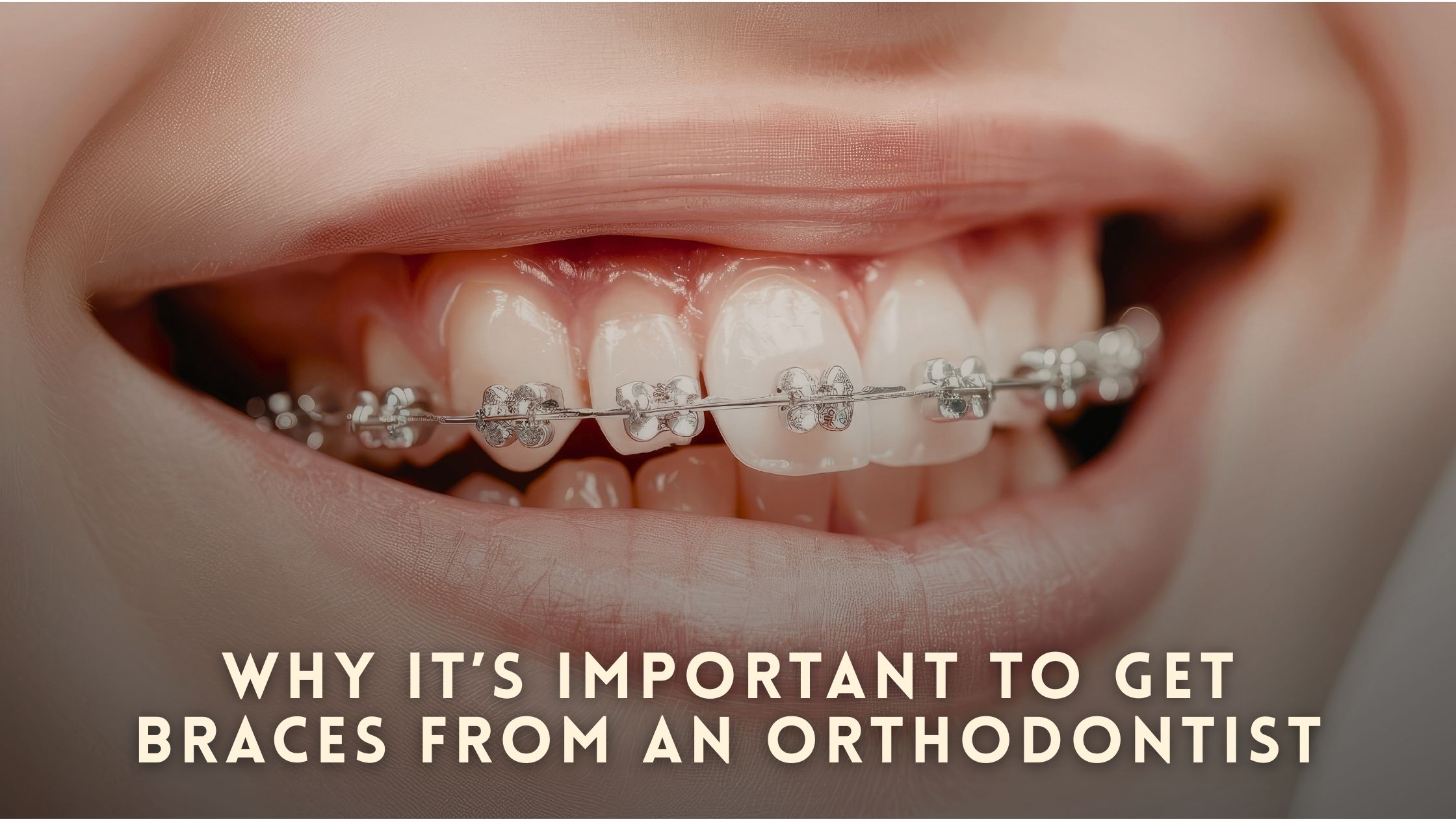
When people think about braces, many assume that any dentist can provide the same treatment. However, orthodontic treatment is a specialized field in dentistry. Choosing the right professional can significantly affect the safety, comfort, and final results of your smile.
In this article, we’ll explain why it is important to get braces from an orthodontist, the types of braces they can provide, and how orthodontists differ from general dentists.
What Is an Orthodontist?
An orthodontist is a dentist who has completed additional years of specialized education focusing on correcting teeth alignment, bite issues, and jaw positioning.
This advanced training allows orthodontists to:
- Plan complex tooth movements
- Correct bite problems (malocclusion)
- Ensure long-term stability of the treatment
- Design personalized orthodontic treatment plans
In short, orthodontists are specialists in straightening teeth and improving how your bite works.
Why Getting Braces from an Orthodontist Matters
1. More Accurate Diagnosis
Orthodontists carefully analyze your teeth, jaw structure, and bite before starting treatment. This ensures that the treatment is safe and effective.
2. Better Treatment Planning
Braces are not just about making teeth look straight. Orthodontists plan how each tooth will move over time to achieve the best functional and aesthetic result.
3. Improved Bite Function
Orthodontic treatment can help:
- Improve chewing efficiency
- Reduce jaw strain
- Prevent uneven tooth wear
- Lower the risk of future dental problems
4. Long-Term Stability
When braces are done correctly by a specialist, the results are usually more stable and long-lasting.
Types of Braces Available at an Orthodontist
Orthodontists can provide different types of braces depending on your needs, lifestyle, and dental condition.
1. Metal Braces
Metal braces are the most traditional and widely used type of braces.
Benefits:
- Very effective for complex cases
- Durable and reliable
- Suitable for all ages
2. Ceramic Braces
Ceramic braces work similarly to metal braces but use tooth-colored brackets, making them less noticeable.
Benefits:
- More aesthetic appearance
- Effective for many orthodontic cases
- Popular among adults
3. Clear Aligners
Clear aligners are transparent trays that gradually move teeth into the correct position.
Benefits:
- Nearly invisible
- Removable
- Comfortable and convenient
They are ideal for patients who want a more discreet orthodontic treatment.
Orthodontist vs. General Dentist: What’s the Difference?
While general dentists are trained to provide overall dental care, orthodontists have specialized expertise in tooth movement and bite correction.
Here are the key differences:
Education and Training
- General Dentist: Completed dental school.
- Orthodontist: Completed dental school plus additional specialized orthodontic training.
Complexity of Cases
Orthodontists are trained to handle:
- Severe crowding
- Bite problems
- Jaw alignment issues
- Complex orthodontic cases
Treatment Planning
Orthodontists use detailed analysis and specialized techniques to guide teeth into their ideal position safely.
Focus of Practice
- General dentists focus on overall dental health such as fillings, cleanings, and restorations.
- Orthodontists focus specifically on alignment and bite correction.
Choosing the Right Specialist for Your Smile
Getting braces is a long-term investment in your dental health and confidence. Choosing an orthodontist ensures that your treatment is handled by a specialist who understands the science behind tooth movement and bite alignment.
With proper diagnosis, personalized treatment planning, and the right type of braces, you can achieve a healthier, more balanced, and confident smile.