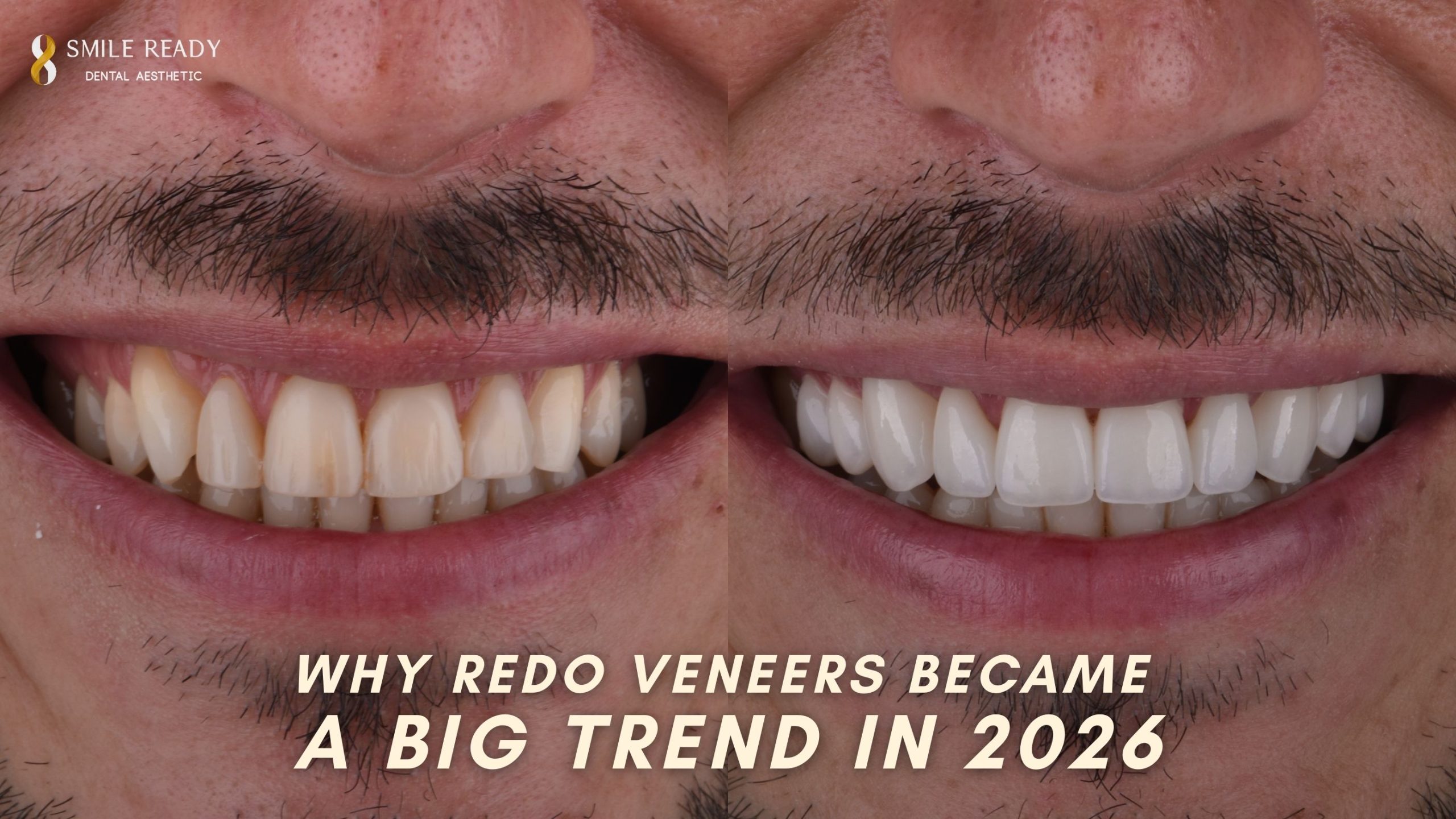
Redo veneers are trending in 2026 because patients are shifting away from bulky, overly white “obvious veneers” and replacing them with natural-looking, better-planned restorations that suit their face, age, and lifestyle. Smile Ready Bali describes 2026 as the era of the “natural smile,” where the goal is not anti-veneer—but better veneers that look soft, seamless, and realistic. This aligns with broader beauty and smile trends reported for 2026 that favor subtle, authentic results rather than high-wattage, artificial-looking makeovers.
What we’re seeing now is a “refresh” mindset: many people aren’t getting veneers for the first time—they’re upgrading old work that no longer matches today’s aesthetic standards or their current oral health needs.
1) The “too white, too bulky” look is officially out
One of the biggest drivers of redo veneers is the change in what people consider beautiful. 2026 smile trends highlight that super-white, obvious veneers are “out,” while natural-looking veneers with enamel-like translucency and believable brightness are “in.” Smile Ready Bali echoes this, calling out bulky, too-white veneers as the kind of result many patients want to redo in 2026.
This new standard is sometimes described as “quiet luxury” for smiles: polished, youthful, and healthy—but not fake.
2) Older veneers are aging—and patients are hitting the replacement window
A practical reason redo veneers are increasing: composite veneers don’t last forever. Many patients who got composite veneers years ago are now noticing issues that signal it’s time for an evaluation and possible replacement—such as discoloration, chips/cracks, gum recession exposing veneer edges, sensitivity, or bonding problems. As gumlines change over time, exposed veneer margins can also create areas where plaque accumulates more easily, which affects both appearance and hygiene. Now is the era of porcelain veneers because they last longer, do not stain, and are stronger.
In short: the trend isn’t only cosmetic—it’s also maintenance and health-driven.
3) “Natural but upgraded” is the new goal
In 2026, a major smile trend is subtle restoration: refined edges, slightly lengthened teeth, and brightness that looks healthy rather than artificial. This approach naturally leads people with older veneers to redo them, because older veneer styles often don’t match the softer shapes and tones patients want today.
It’s also why many patients are moving toward minimal-prep or more conservative veneer approaches, aiming to preserve as much natural tooth structure as possible.
4) Better technology makes redo veneers more predictable
Cosmetic dentistry trends for 2026 increasingly highlight ultra-thin veneers designed for natural translucency and improved realism. Some practices also point to modern workflows like printed mockups/try-ins that help patients preview shape and smile design before final restorations are made, reducing surprises and improving satisfaction.
This tech-driven predictability makes patients more confident about redoing veneers—especially if they had an older result they didn’t love.
5) Social media raised the bar (and made “veneers refresh” normal)
Smile aesthetics are constantly visible on video, reels, and selfies, and 2026 media trends continue to reinforce demand for natural, camera-friendly results. With more education and visibility around cosmetic dentistry, people are also more willing to admit, “These are old veneers—I want a better version,” instead of sticking with a look they’ve outgrown.
Signs you might need redo veneers (not just a shade change)
If you already have veneers, these are common reasons dentists may recommend reassessment or replacement:
- Veneers look too opaque, too white, or bulky for your face now.
- Chips, cracks, or wear that affects function or aesthetics.
- Gum recession showing veneer edges or creating visible gaps.
- Persistent sensitivity, discomfort, or suspected bonding problems.
- Staining/discoloration that doesn’t improve (especially if materials have worn over time).
What to do if you’re considering redo veneers in 2026
Start with a proper evaluation—cases involving veneer replacement should include a gum health check, bite assessment, and a plan that prioritizes aesthetics and long-term stability. Many trends in 2026 focus on preserving tooth structure and health while achieving natural-looking results.
- WhatsApp: +62 812 9590 6161
- Location: https://maps.app.goo.gl/4jc9gvmmqHvCHVh86
- Instagram: Instagram
Book a consultation: https://smilereadybali.com/contact-us/