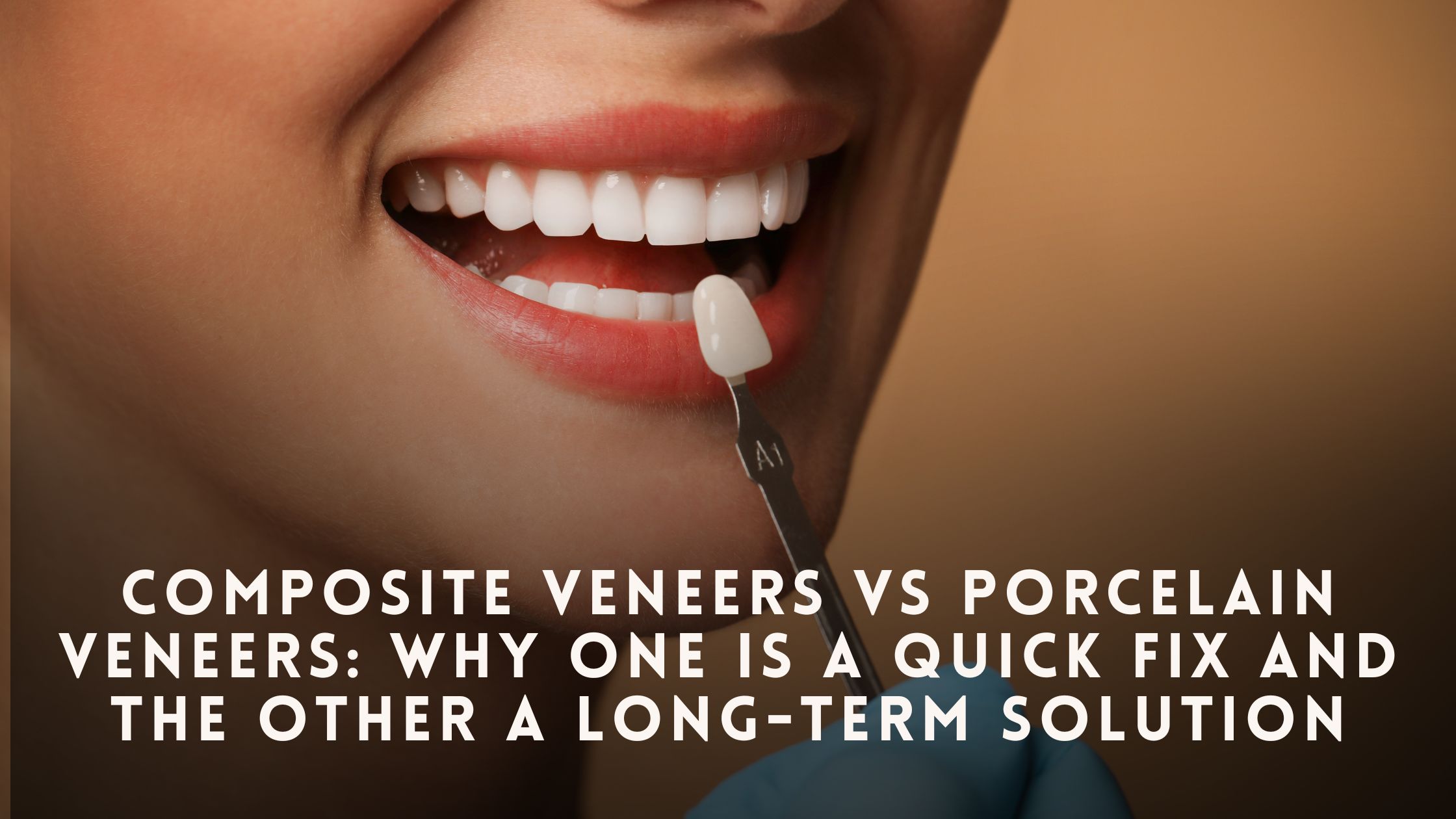
When people start exploring options to improve their smile, veneers are often one of the most popular choices. They can enhance the shape, color, and symmetry of teeth, creating a brighter and more balanced smile. However, not all veneers are the same. The two most common types are composite veneers and porcelain veneers, and understanding the difference between them can help you make a better long-term decision.
Composite Veneers: A Quick and Accessible Solution
Composite veneers are made from a tooth-colored resin material that is applied and sculpted directly onto the teeth. One of the biggest advantages of composite veneers is the speed of the treatment. In many cases, they can be completed in a single appointment.
This makes them a popular option for people who want immediate improvements to their smile.
Some advantages of composite veneers include:
- Faster treatment time, often completed in one visit
- Lower initial cost compared to porcelain veneers
- Minimal or sometimes no tooth preparation
However, while composite veneers can look good initially, they are generally considered a shorter-term solution.
Why Composite Veneers Need More Frequent Replacement
Composite resin is a softer material compared to porcelain. Over time, this means it can be more prone to:
- Staining from coffee, tea, wine, or smoking
- Chipping or wear
- Losing its polish and shine
Because of these factors, composite veneers usually require more maintenance and may need replacement every few years, depending on lifestyle and oral habits.
For patients seeking a long-lasting smile transformation, frequent replacements can eventually become time-consuming and costly.
Porcelain Veneers: The Long-Term Investment
Porcelain veneers are widely considered the gold standard in cosmetic dentistry. They are custom-made in a dental laboratory and designed specifically to match each patient’s smile, facial features, and bite.
Compared to composite, porcelain offers several advantages:
- Stronger and more durable material
- More resistant to staining
- A natural translucency that closely mimics real enamel
- Longer lifespan when properly maintained
With proper care, porcelain veneers can last many years while maintaining their shape, color, and natural appearance.
A Natural and Health-Focused Approach to Veneers
While porcelain veneers are often the most recommended option for long-term results, the success of any veneer treatment depends on proper planning and careful execution.
At Smile Ready Bali, smile transformations are designed with both aesthetics and oral health in mind. Each case is evaluated individually to ensure that veneers support healthy bite function, natural proportions, and long-term comfort.
This approach helps patients achieve a smile that not only looks beautiful but also remains stable and functional over time.
Choosing the Right Veneer for Your Goals
Both composite and porcelain veneers have their place in dentistry. Composite veneers can be a great short-term or transitional solution, especially for minor corrections or when patients want immediate results.
However, for those seeking a durable, natural-looking smile that lasts for many years, porcelain veneers are generally the most recommended choice.
Taking the time to understand these options—and consulting with an experienced dental team—can help ensure that your smile transformation is not only beautiful but also built to last.